Sunday, 20 June 2010

Holland: A Country Defined By A Color

As I walked through The Hague in the Netherlands this past weekend the amount of orange was overwhelming. Even in this internationally important city which houses the International Court of Justice, the International Criminal Court, and the Dutch Parliament, the orange color, a symbol of the Dutch royal family, was inescapable. From the ordinary flags and post boxes, to the orange themed shop windows and orange streamers strung across streets, the immense support for the national football team was quite apparent. In fact, one of the fountains in the city center had even been dyed orange. As the water spurted from underneath the ground through small holes in the center of the plaza, it literally appeared as though the country was bleeding orange.


For the United States the World Cup is just another sporting event that we compete in, ranking well below the Super Bowl, the World Series, and the Stanley Cup playoffs for many Americans. In Europe, however, the sentiment towards the World Cup is much different. It is the most important and looked forward to sporting event. Hosted every four years, the World Cup brings together teams from across the globe to compete for the most prestigious title in the sport of football. But for many countries, the World Cup is more than just another football game. The players aren’t just a group of guys dressed in colored uniforms trying to score goals; they represent the country’s history, people, and culture. They are a symbol of the country. The fans aren’t just showing their pride for their football team when they wear their colored scarves, but are showing their identification with their country – their nationalism.


The Dutch team is certainly no exception to this. The team represents the long history and interesting culture of the Netherlands. This includes their attachment to their language with Germanic origins, Dutch; their unique heritage characterized by windmills, tulips, and wooden-shoes; and their commitment to peace and justice, symbolized by the Peace Palace in The Hague.

One woman I had the opportunity to talk to in Rotterdam this past weekend truly knows the importance of the Dutch commitment to peace. Sitting on Jeanne’s couch as her daughter translated from a large book, I listened again to the story I had heard hundreds of times before. Jeanne Oussoren (seen below with her daughter, my mom, my brother, and I) was only teenager when World War II broke out and Holland was invaded by the Nazis. She was a Christian, as many people in Holland were and are today, but was working for a Jewish family at the start of the war. Frightened by what might become of this family and their children (she knew Jews were being rounded up and taken to Poland, but she didn’t know what was happening to them), she risked her life by joining the Dutch Resistance and helping to smuggle Jews to the Belgian border where they were then taken by other resistance members to safety in Switzerland. Throughout the remainder of the war she took a Jewish child and pretended she was her own, smuggled ration cards, and hid from the Nazis after being betrayed by a woman she worked for. Jeanne survived the war and in 1997 was recognized by Yad Vashem, the Holocaust memorial center in Israel, as being Righteous among the Nations (an honor bestowed upon non-Jews who helped save Jews during the Holocaust). Jean saw first-hand the devastating impact of extreme nationalism as the Nazis gained power throughout World War II and began exterminating people based on their religious beliefs.

Though I had met and spent time with Jeanne before, this time was more emotional. At 90 years old this extraordinary woman is blind and gets tired after only a few hours of light conversation. Sitting there, I realized the importance of keeping her story and the message of peace and justice alive because, sadly, those who were eyewitnesses to the atrocities of German nationalism gone wrong will soon be gone.

As we left her apartment we drove down the highway and passed an office building with plastic cows interestingly positioned on the front lawn. Facing each other as if they were about to go to war, one half of them were painted orange, and the other half were wrapped in Japanese flags to represent the pending World Cup game of Holland and Japan . It dawned on me that through football Holland is keeping alive its country’s shared history. Though sports casters don’t announce that the team is playing in memory of the country’s past and their commitment to peace in the future, it is clear that in Holland, as in most European countries the football games are more than just games. They are ways to settle old rivalries, peacefully battle against new enemies, and keep alive the spirit and nationalism of the country. The orange stands for more than just a football squad, but also for Holland’s past, present, and future.

Monday, 14 June 2010

Fit For A Queen


Buckingham Palace is an icon of British culture; it is one of the most important tourist attractions in all of London. It was established in 1837 and showcased that England was a world power through its luxurious architecture and decadent surroundings. Buckingham Palace is the official home of the Queen of England and is surrounded by the infamous foot guards spaced evenly along the perimeter.

This was definitely one of the highlights of London for me because there is so much to see, from the time you walk up you can see the gold enveloping the whole courtyard and clearly see that this is the place of a monarch. The courtyard is separated into different territories, there are both public and private domains, and the boundaries are crystal clear. Surrounding Buckingham Palace there is a massive fence that encloses the actual palace, and lets tourists only come within about 300 feet of the actual building, but not to worry the palace is so extensive that you really need to stand back from it to take it all in at once!

Directly in front of the palace there is an enormous fountain created to be a memorial for Queen Victoria, who was the first queen to live in the palace. This fountain is a very popular public space and the perfect backdrop for a photo. This fountain was filled with various coins from all over the world where people had tossed them into the water in hopes of having their wish come true. So of course, I tossed my 1 pence piece into the water and made a wish, I wish I had still had some American coins to toss in, but I had them all converted over to pounds before we hopped on the Eurostar to London.

Buckingham Palace was spectacular in itself, but the parks that surrounded it were so beautiful and fun! There were two parks adjacent to the palace, St. James Park, and Green Park. St. James Park was special because it showcased a sense of patriotism that I had not witnessed elsewhere. There was an entire street that was lined with English Flags, and the street was packed with pedestrians and taxis competing for a perfect view of the picturesque park. Green Park was seemed to be a much more open park that attracted more locals. There were lots of people running and walking dogs all around Green Park which suggested that the population at this particular park was much more of a mix between people who lived near Piccadilly Circus and tourists who were hoping to catch a glimpse of the life as a Londoner. Scattered throughout Green Park were tons of painted elephants that were put there to promote awareness of the endangered Asian elephants. The Queen endorsed this “Elephant Parade” and she wanted them to be spread about Central London to show that London is focused on helping sustain some of the world’s most precious creatures. These were really fun to see and it was exciting to see such a huge cluster of them in Green Park so close to Buckingham Palace.

All in all, Buckingham Palace and the surrounding parks were so different from anything you could see in America. The history, politics, and culture that are embodied in these areas are extraordinary. The Royal Family has a diminished role in politics compared to what there role once was, but the people of Britain hold this monarchy so close to their hearts that they have decided to keep them as a symbol for their country and support them through their taxes that they pay. I had been to Buckingham Palace before, but this time I knew more of the background and I was able to appreciate it so much more!

OMG I Went to Africa


When I first chose to attend MUDEC a few months back, I viewed it as an opportunity to experience all the wonders of studying abroad while still maintaining a certain comfort level for myself. Studying abroad is without a doubt the most ambitious experience I’ve taken on to date, but when I chose a program, I wanted to maintain some sense of normalcy in hopes of allowing myself to be more adventurous during my time abroad. I think my trip to Morocco last weekend shows that my plans have worked out so far to a tee. When I hopped on the plane from Chicago to Luxembourg, I never would have dreamed of traveling to Africa, but after doing so I have to say that it was probably the most eye-opening experience of my life. Walking around the markets in Marrakech I realized not only how similar Europe actually is to life in the United States, but more importantly just how much we take for granted in our everyday lives.

In traveling to Europe I expected there to be some sort of a major culture shock that I would have to deal with, but to my surprise I’ve never really felt that uncomfortable over here. The only real difference, for me, is that I can’t understand everyone around me, but lifestyles are more or less exactly what I’m used to at home. However, after spending just over an hour walking around Marrakech, Morocco, I realized just how different Morocco and Africa really are from everything I’ve ever known. I remember turning to one of my friends about halfway through our tour of the market and saying, “I’m on culture-shock overload right now,” and I think that pretty much expressed all of our feelings. Everything was so cramped, so dirty, and about as third-world as I could have imagined. Mopeds zoomed by us at every turn, and we even saw someone run into a child at one point. The vendors hounded us constantly in hopes of bartering a price for some of their goods, and after a short period of time I felt absolutely overwhelmed. Marrakech, the fourth largest city in Morocco, is actually a fairly popular tourist attraction and one of the nation’s main tourist cities, so I was expecting somewhat more of a “touristy” atmosphere. However, what I saw was a fairly accurate depiction of Moroccan life. There were definitely tourists in the area, many there to experience the souk, Morocco’s largest traditional market, but everything was certainly different from anything I’ve ever experienced. http://en.wikipedia.org/wiki/Marrakech

Marrakech is also very interesting from a geographical perspective. One of the first things I noticed was that the city was laid out much like a typical European city, consisting of both an old city surrounded by a fortified wall and also a new city outside the wall. Our guide told us that this was characteristic of most Moroccan cities, but what stuck out to me was that, in contrast to a city like Barcelona, the old wall is still standing. The old cities in all of the European cities I’ve visited certainly feel like the “old city,” but they are also very modernized and up-to-date. In Marrakech, however, I felt like I was stepping back into an old Medieval city. Living conditions, for the most part, were far below anything I’ve ever seen in the United States or Europe, and everything just seemed dirty. It was very easy to see the contrast between industrialized Western Europe and the mainly agricultural economy that still defines Marrakech. While Europeans were tearing down their city walls, industrializing, and modernizing, countries like Morocco were standing frozen in time. It truly felt like I was stepping back into the pre-industrial world. Despite a large tourism industry (the market we visited, much to my surprise, is one of the main “touristy” areas in the city), Marrakech has failed to modernize in any of the ways we would typically expect to see. Outside of the old city the buildings are newer and some new resorts dot the landscape, but everything is still by and large very primitive. It’s incredible to see the difference that industrialization has made for those nations who have already embraced it.

If someone would have told me at this point last year that I would be visiting Africa on my study abroad tour, I probably would have thought they were absolutely insane. Even as I got on the plane from Madrid to Marrakech, I was still unsure of what I would think of the experience. It would be a lie to say that visiting Morocco was the best or most enjoyable experience of my trip so far, but it was without a doubt the most eye-opening and the most important, I feel, in changing the way I look at the world. The standard of living in Europe is basically identical to what we’re all used to in the United States, but in Morocco I was able to catch a glimpse of the third world, and it truly gave me a new appreciation for all of the things (such as clean tap water) that we in Western civilization often take for granted. Seeing Morocco has truly made me appreciate all of the luxuries that I have come to expect as commonplace, and I feel like a trip there would be very beneficial for any future MUDEC students.

Culture Shock: Mo-rockin' My Mind

Thursday, June 10, 2010: Marrkech, Morocco

Before I arrived in the North African country of Morocco, I didn't have many expectations. I knew that we had planned a camel riding trip on the beach about three hours from our destination of Marrakech, and that was enough for me to want to go. However, as soon as we stepped off the plane around 8am on Thursday, June 10, I was overwhelmed with culture shock. As I took a whiff of the dirty-smelling African air and walked along the rocky brown ground, I looked at my other ten travel companions, and we all shared a look that said, "Where ARE we?!"

The eleven of us got on the bus with our travel guide to take us to our hotel. The ride was far from smooth-- I felt like we were riding through an earthquake and that our bus would collapse and/or explode at any given moment. Despite this brewing fear and growing concern for our safety, I couldn't wipe the smile off my face. With every sight we passed, my jaw continued to drop. This was completely different from any place I had ever seen before.

Marrakech, the former imperial capital of Morroco, is also known as the "Red City," and for an obvious reason. Nearly every building is pink mud-brick, reflecting the ground and landscape seen all over the city. This was one of the first things I noticed when we finally arrived at our hotel, situated in the middle of narrow alleys and run-down markets with no street signs in the medina quarter, or old city. We immediately decided that we would be attached-at-the-hip to our guide-- there was no way we would risk getting lost in the streets filled by malnourished cats and dogs, beggars of all ages, and desparate venders trying to sell us their goods. After some research, I learned that a medina quarter such as the one we lived in is common in many North African cities. They are usually walled with winding, narrow streets. They were built by Arabs (Morrocans speak Arabic and are mostly Muslims) around the 9th century to hinder and puzzle invaders. This site explains and lists other medinas found in North Africa: http://en.academic.ru/dic.nsf/enwiki/510065.

Our first tour of the city was of the largest traditional market and one of the busiest squares in the world, the Djemaa el Fna. Walking through the "souk" markets resulted in sensory-overload: there was so much going on, I didn't know how to react to the various sights, sounds, and smells. It would be impossible to recount everything we experienced walking through the square, and equally difficult to express how it impacts a person. This website, however, gives a good background for the square: http://www.marrakech-cityguide.com/en/sightseeing/street/jemaa-el-fna.shtmlreet/jemaa-el-fna.shtml.

The square is representative of the geography of Morocco, as the venders, artists, and performers display the goods found in the area, as well as the various cultural aspects of the city. We passed countless food venders selling fruits, vegetables, seafood, and meats all found within the district- particularly olives and livestock. Because the city isn't far from the Atlantic Ocean or the Mediterranean Sea, and since Marrakech is surrounded by mountainous regions, these foods reflect the geography and economy of the area. In fact, 44.6% of Morocco's economy is based on agriculture (https://www.cia.gov/library/publications/the-world-factbook/geos/mo.htmlww.cia.gov/library/publications/the-world-factbook/geos/mo.html). However, none of these things were displayed the way we are used to seeing them sold in America. The food stands were an oasis for flies and other insects, and entire animals were hanging from the roofs of meat stands, giving a whole new meaning to "fresh." Outside the souk markets, the crowded square was filled with snake charmers, monkey tamers, acrobats, and musicians playing traditional Moroccan music.

After going through a rug store filled with thousands of luxurious hand-made carpets and browsing through various jewelry and woodwork shops, we stopped at, in my opinion, the most interesting shop in the market of herbalists, the Moroccan version of a pharmacy. There we learned that most people in Morocco don't use "common" forms of medicine, such as Tylenol or Aspirin, but rather rely on herbs and plants to cure a wide range of ailments, including acne, headaches, sinus infections, and dry skin. All of the herbs they used are found throughout the country, again indicating the geography of the land. We got to sample many of their products, including "black rice." In order to do this, we had to put the black seeds in paper, rub it to get the chemicals, and then inhale them through our nose. The 11 of us all giggled because we generally associate something like that with drug use. It was the strangest sensation as I inhaled: my eyes began to water as I stifled a cough. However, my sinuses were instantly cleared. Although we thought many of these practices were "weird," they are very common in Morocco. This is an interesting study I found where researchers studied the use of herbal remedies for diabetes in Morocco: http://care.diabetesjournals.org/content/24/3/608.2.full.

We continued to walk throughout the souk markets and the square, and later continued the day visiting gardens and seeing acrobatic performances while being treated to a VIP-style Moroccan dinner. The next day we visited a coastal city and rode camels on the beach. Overall, my experience in Morocco was by far the most educational and eye-opening experience that I've had this summer, and one of the most amazing times I've ever had in my life. Although I was completely out of my comfort zone, I loved every minute of our 48 hours in the country. I learned so much about a completely foreign culture and was able to apply several geographical concepts to my experience. Even if you don't get the chance to explore Morocco, another African country, or somewhere similar, I highly recommend learning more about lifestyles completely different from the ones we live in America. You might be shocked, but you won't regret it.

You can learn more about the culture and geography of Morocco here: https://www.cia.gov/library/publications/the-world-factbook/geos/mo.html


More Than A Market


Located in the central region of Morocco near the Atlas Mountains (http://maps.howstuffworks.com/morocco-topographic-map.htm) is by population, the 5th largest city in Morocco; Marrakesh. This French and Arabic city is a cluster of orange-salmon buildings brushed with dirt and trash that wind into narrow streets and frame the major market of the city. Walking through the main attraction; Djemaa el-Fna Square one is instantly bombarded by senses overload. Smells of exotic spices, the site of monkeys and snake charmers, and the sound of traditional Arabic music and people bartering serve as the backdrop of this busy square.


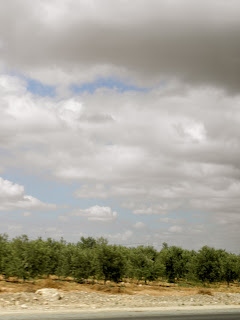
The market is the heartbeat of the city and is also one of the largest markets in the world. It is where both locals and tourists go for authentic Moroccan goods; whether for everyday staples or for one-of-a-kind souvenirs. There are souqs, (http://www.journeybeyondtravel.com/news/morocco-travel/morocco-souk-and-markets.html) which are groupings of vendors within the market scattered inside the square. Wandering deeper into the market, one begins to see repeating goods being sold. The site of piled olives, wool clothing, and colorful spices on display for sale is quite frequent. It wasn’t until our 3-hour drive to the coast of Morocco the following day that I realized why these items are so widespread at the market. While driving through the rugged Moroccan countryside, I couldn’t help but notice the never-ending fields of olive trees. I later found out that Marrakech is one of the world’s leading olive exporters (http://www.marrakecholiveoil.com/accueil.php?language=en). Olives of all varieties are grown throughout the Moroccan landscape. The moderate, subtropical climate conditions are ideal for growing olives year-round. There are also herds of goats and sheep that cluster the hills of the countryside grazing on grass. These animals serve as sources of income for farmers, wool clothing for both locals and tourists, and national dishes for Moroccans.

There are so many connections the market has to the culture, gastronomy and geography of this North African country. Most of the products sold are locally grown and benefit the smaller businesses or farms in return. The olives symbolize the geographical connection to Moroccan cuisine and global trade through exporting. The countless spices represent the thousands of years natural remedies and zesty cooking have been around. These three common goods are sold at one central location, yet have such different backgrounds and purposes. It was fascinating to see the product in the marketplace and souqs as well as where it came from or why it is so abundant specifically in Morocco. Walking through the

market there were a few areas that were meant specifically for the locals. These niches sold more of the everyday items, such as mops, brooms, cleaning supplies, etc. It was interesting to see these distinct areas be placed alongside a very touristy section of the market. These local territories were clearly defined by products and vendors. There were also distinct sections where food vendors would be set up. Three or four concession stations were lined up side-by side selling the same juices and sandwiches, further contributing to the distinct zoning of the market’s square. It is no accident that this impressive market is one of the biggest tourist attractions in all of Morocco. Every product from the wide assortment of olives to the cleaning supplies are meaningful and serve as a necessity for locals and tourists alike. Djemaa el-Fna Square is a magnificent spectacle that reflects the Moroccan economy, geography, gastronomy, and culture in one.

The Centre of Marrakech

This past weekend I traveled with ten other classmates to Marrakech, Morocco which is located in Africa; it was truly an experience of a lifetime! We witnessed the Moroccan culture, people, and how these two things interact. Morocco is located in the North West part of Africa and Marrakesh is located towards the middle of Morocco. Morocco has a side of its territory that lies on the Mediterranean Sea, which as we all know allows them to trade and communicate with other nations much easier than a city or country located in the middle of Africa. Allow this country is still far behind in development, you can witness their outside influence through many things within their culture such as their irrigation system, their language, and the way they conduct life.

One of the major attractions that we witnessed and experienced during our stay in Marrakech was the Djemaa El Fna Square and the adjoining souk streets. “The Djemaa El Fna Square is the geographical, cultural and social centre of Marrakech.” (http://www.marrakech-cityguide.com/en/sightseeing/street/jemaa-el-fna.shtml) This square dates back to the 11th century. The translation of the squares name is argued still to this day. One side says that it means the “site of the destroyed mosque” and the second side says that it means “assembly of the dead.” (http://ezinearticles.com/?The-Djemaa-El-Fna-Square-in-Marrakech&id=2370715) One of my most vivid and most frightening memories occurred within this place during our first night. We had just finished touring the Square and were working our way back through the souk streets. As we worked our way back the smell of dirt, sweat, and spices filled our noses; the site of hundreds of open store fronts filled our eyes; and the sound of many dealers saying “Come in my store, very low prices” filled our ears. After walking into a few of these store fronts and coming back out with only a few purchases, our group had many dealers following us and bugging us. The only thing that we could think to do was continue to tell them “no thank you” and keep walking. In my mind, I was worried about being pick pocketed, someone being taken, or being jumped. At one point in time a dealer walked up to me and grabbed and pulled on the back of my shirt, I was a bit nervous at this point and started to turn around and say something to our tour guide when I noticed that he was nowhere to be seen. At that point I said to the group “We need to turn around I don’t see our guide anymore!” Thus we turned around and walked past all of the dealers that were still heckling us and ended up running back into our guide who was waiting on a few of the members that were still in shops purchasing things. After we had the guide with us the dealers stopped bothering us as much.


Now throughout the rest of the night and into the next day I thought to myself, “What makes these people act the way they do?” A few things came to mind: it seemed like there were multiple dealers with the same exact products, they are a poor nation and their income isn’t that high, and this is how their culture has raised them since they have been young children.


As we worked our way through the souk streets and looked at the dealers, it seemed like many dealers were “repeats” of what we had already witnessed. It seemed like every dealer was a rug dealer, a pottery or woodworking dealer, a cloth or clothing dealer, a leather shoe dealer, or an olive dealer. Our guide described and talked to us about the importance of the Olive to the Marrakesh people and economy. He said that Marrakech was the third largest grower of Olives in Morocco. We visited what they called a garden but what we would call an Olive field. They had built an irrigation pond with irrigation canals for the hundreds of olive trees in this “garden”. It was very apparent how important the olive was to this economy, because of the fierce competition that exists within this market, it leads the dealers to be very pushy. You could also see how all of the products that were being sold linked back to the environment of Marrakech and Morocco.


The second reason I came up with was because of the poverty level and level of income of the Moroccan people. According to the World Bank report in 2001, the per capita household consumption (in constant 1995 US dollars) was $951. The richest 10% of the population accounted for approximately 30.9% of household consumption and the poorest 10% approximately 2.6%. (http://www.nationsencyclopedia.com/Africa/Morocco-INCOME.html) This explains why the dealers would do anything to make a sale, even harass you and bother you to the point of being terrified. This explains their economy and economic position in their economy.


The third reason that answers why they act the way they do is because of the way they have been raised since being young children. As we walked through the streets we had many 5 year olds coming up to us asking for money. The second thing that I witnessed and experienced was negotiation for a product with a 12 year old. His father was the owner of the store and he was negotiating with me for a product. It will be very hard to ever break out of this tradition due to the training that they have at such a young age. This explains their culture in way.


Through all of the scared moments, I had a wonderful time (and eye opening time) in Morocco and would recommend all of you to go… just go the smart way and book through a travel agent!

Other Links

http://www.marrakech-cityguide.com/en

http://www.frommers.com/destinations/marrakech/3949010002.html

http://www.ilovemarrakech.com/

Map to The Djemaa El Fna Square


View Larger Map

Order from Chaos


Order from Chaos

When were told about Barcelona it was described as a city that never sleeps and that there is constant noise. As I ventured down the Las Rambles which is one of the most famous streets in Barcelona I noticed all of the noise and commotions but it appeared to have a certain order. Las Rambles is a 1.2 km long http://www.barcelona-tourist-guide.com/en/ramblas/barcelona-las-ramblas.html street that has spans many different types of life and culture of Barcelona. At the southern most end of the Rambles is the Port Vell and the Gothic Quarter off of the right side. This street started as a small stream that flowed outside of the city wall. In the 19th century the wall was torn down and the street was reborn into a larger collection( Las Rambles ) of the smaller streets http://www.aviewoncities.com/barcelona/rambla.htm. This street is a flow of people and traffic. There are tons of the standing “ Statues” that are performers who dress up and pose for money. There is also not a shortage of restaurants selling Paella and Sangria. The major symbols of the Catalan Culture are all representing in some way in this street. The Ramba de Sant Josep has been up graded from it’s usually form of just a street to have been made into Mercat de Boqueria or Flower Market http://www.aviewoncities.com/barcelona/rambla.htm. Even though the Rambles has many different things going on from the mass of tourist walking the street to the local Catalans who are trying to get their vehicles down the side streets. To be a part of this clash of culture where there are not very many boundaries between people and cars is an adjustment. According to Tremlett’s Ghost of Spain the layout of the busy street in Barcelona is the epitome of what the Catalans life style is about. I thought that Spain was a busy place in comparison to the other European cities that I have been to. Then I went to Marrakech, morocco.

When telling someone that you are going to Morocco many people will wonder if you are going to the magical city of Casablanca to see where the memorial movie was filmed http://en.wikipedia.org/wiki/Casablanca_(film). We did not we headed to the main tourist city of Marrakesh. Known as the “Red City” because it used to be the imperial city of Morocco. The unique thing about the city is that it is one of the only cities that still have an old walled city and a new modern one adjacent to it. The city has been through many transformations with being the capital of Morocco and being built up as a religious center for Sufism pilgrims. The city is known for the seven saints which is a festival invented during the reign of Moulay Ismail http://en.wikipedia.org/wiki/Ismail_Ibn_Sharif. This festival and movement of tombs of famous figures was to attract more pilgrims of Sufism http://en.wikipedia.org/wiki/Sufism during its height.

My first experience in Morocco was that of an illegal immigrant. At the customs station my passport was not stamped but it was typed into the system. This did not seem to be a problem until I arrived at the hotel and the employee was baffled that I had been let in the country. When our tour guide returned to get us he was informed of my illegal status and he told me that we would have to take the 20 min ride back to the airport in order for me to get a stamp. Now I was not too worried at this point but my tour guide was more visible shaken. I was let in the customs area and had to ask the agent give me a stamp. Now I would have never thought that these stamps that the custom agents stamp in such a haphazard way would ever matter this much. I was given a little bit of a hassle and then I was stamped. I was now official in the country in accordance to the Kingdom of Morocco law. Now I didn’t think that this was as large of problem as my tour guide was worried about but in reality I could have been a member of Moroccan society for longer than I had planned. The stamp in the passport was the symbol that is given to all foreigners to show that they were allowed for a short time in the Moroccan boarder. This shows the difference between EU nations boarders and non – EU nations.

Another experience with territory and barriers was visiting the market in Marrakesh. The market in Marrakesh one of the largest in Morocco http://en.wikipedia.org/wiki/Marrakech and is something that would only work in a country like morocco. For how tight the customs are to get into the country that idea of boundaries does not transfer into the market place. The sights, sounds, smell are all enough to make someone think that noise and bustle of Barcelona is nothing but a whisper. The boundaries in the market are nonexistent between the food vendors and the people fixing tables and chairs. One of the largest and most dangerous lack of boundaries is that of the roadway and pedestrian space. In the narrow alleys of the market a person will be passed by at least 3 bicycles and 2 or more motorbikes. The only warning given to pedestrian is the small honk of a horn or a yell (conveniently in French or broken Arabic) for you to get out of the way. The street vendors have their wares all over the street and in the more crowed areas of the market there is not a clear difference between one vendor’s wares and the neighboring stores.

The differences between these two cities were enormous yet they have similar aspects of viewing themselves as unique. Barcelona is considered the city that is full of life and yet very refined to the people of Catalonia. Where they follow certain protocol that makes them Catalan. The city of Marrakech is a new and developing city that is trying to blend its old traditions and boundaries into something that will be welcomed in the 21st century as a global tourist city.